News
Search All News
Sunday, September 13, 2026
Office Hours
Monday - Friday 9am - 5pmClosed Sat. and Sun.
Lehman's Newest Schwarzman Scholar Swaps The Bronx for Beijing
January 22, 2026
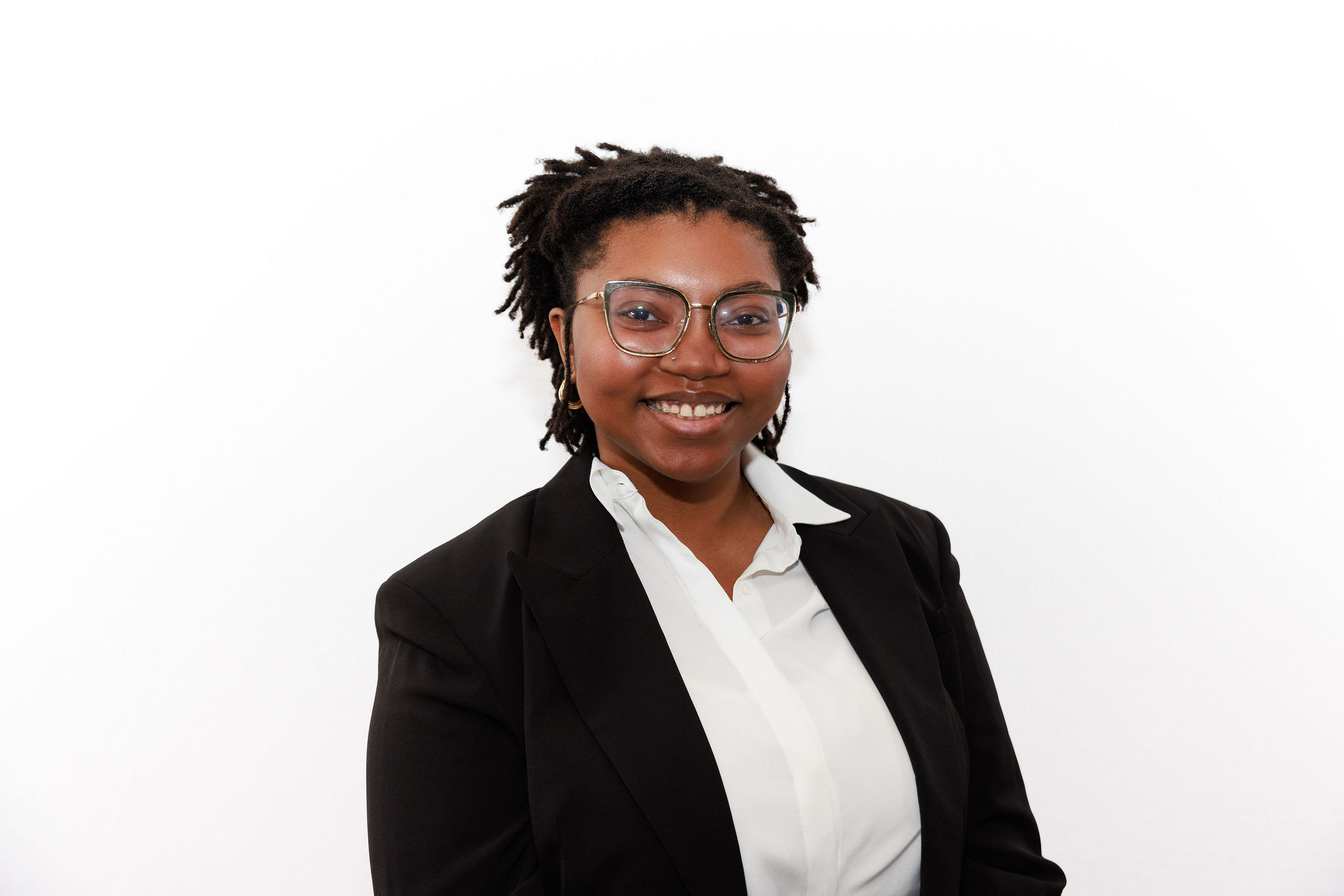
Beginning her higher education in The Bronx, senior Kilhah St. Fort will be taking it to Beijing in the fall as a member of the 2027 Schwarzman Scholars cohort. She is the second Lehman student to be accepted into the highly prestigious, fully-funded program, which will support her pursuit of a master’s degree in international leadership at Beijing’s Tsinghua University. St. Fort is well-prepared for the challenge, having spent the past three years expanding her perspective far beyond the classroom. As a Macaulay Honors College and CUNY BA student, she designed her own major in Data, Technology, and Society. As a Jeannette K. Watson Fellow, she interned with the Aspen Institute’s Religion and Society Program, with Youth Alive! Kenya, and most recently in Kuala Lumpur with Whose Knowledge?—experiences that sharpened her focus on power, representation, and advocacy. We asked St. Fort about the risks and rewards of living and working abroad, what she learned as a Watson Fellow, and how her education has primed her for the Schwarzman Scholars program. This is her Lehman Story.
What drew you to the Schwarzman Scholars program?
What initially drew me to Schwarzman was its emphasis on developing as a leader within a cohort. Like a lot of people, I used to have a pretty rigid idea of what leadership looked like, and my time at Lehman really pushed me to unlearn that. It became clear that there isn’t just one mold for a Schwarzman Scholar—the idea of growing into your own leadership while being in community with other leaders felt really powerful and beautiful.
In terms of studying in China, on the professional side, I’m interested in how emerging technologies and big data are reshaping governance. On the personal side, I’ve learned that the best way to understand a culture is through immersion.
It’s a very competitive program—what was the application process like?
I started my application in May—five months before the deadline—and went through eight drafts. I was living and working in Malaysia for three of those five months and had a lot of late-night Zoom calls with the Office of Prestigious Awards. The hardest part was the interview stage, after I submitted my application. I did two rounds of interviews, and I relied a lot on my mentors and professors to prepare. I did multiple mock interviews and asked for strong pushback to help refine my ability to communicate and defend my ideas.
What does being a Schwarzman Scholar mean to you?
Being a Schwarzman Scholar is closely tied to my identity as a CUNY student. As only the second Lehman student admitted to the program, I see this as a chance to represent my community and everything it’s taught me. CUNY’s diverse student body encourages students to carve their own paths while also going the extra mile to support one another. I can’t stress enough how far that mindset can take you. One of the biggest lessons I carry with me is that challenges aren’t something to shy away from—they’re something to lean into with excitement.
What experiences are you looking forward to in China?
I’m a big theater fan so I can’t wait to attend a biàn liǎn performance. Biàn liǎn is an ancient Chinese dramatic art form where performers wear decorative masks and instantaneously change faces whenever they move their head, wave their hand, or swipe their fan.
By the end of my year as a Schwarzman Scholar, I hope to speak Mandarin conversationally, better understand what a career in technology policy can look like, grow more comfortable engaging with people who hold different worldviews, explore at least five cities or villages outside Beijing, and build lifelong friendships within my cohort.
How did Lehman prepare you for this next step?
One of the throughlines in my classes at Lehman is the importance of community. My professors have always pushed me to think about how what I learn in a textbook translates to real life. This has helped me become a scholar in my own right. Inside and outside of the classroom, rather than just consuming information, I'm always asking myself what is missing, what can be added, and how.